A1
#1E4A6E
Deep Water
The lake is 143 metres deep, and dark most of the way down.
This is a preview website.
Cusio / Omegna / Lago d’Orta
Turned from a single billet of aluminium in Omegna, at the top of Lake Orta. One shape, four lengths, three finishes.
Bottles from €120
View 01Elevation
A billet of aluminium goes into the lathe at 82 millimetres and comes out at 74, hollow. About 900 grams of swarf comes off it, and goes back to the smelter down the road.
Cusio · B-1000, 1 L
Alu 6082 · Half section
Ø 74.0mm
The body is bored from one end out of a single billet of 6082. There is no seam, because there is no second piece.
268.0mm
One litre to the shoulder. The bar is cut longer or shorter for the other lengths, and nothing else on the drawing moves.
1.6mm wall
What is left standing after boring. Cold reaches your hand through it in about a minute.
8°taper
The cap seals metal on metal on a lapped taper. No gasket, no liner, no plastic anywhere on the bottle.
310g
Empty, in raw finish. Anodizing adds about two grams.
41min
Cutting time for one body, across two operations. We make about nine in a week.
View 02Range
Every part is turned from the same 82 millimetre bar and bored to the same 70.8. The length is the only figure that changes.
Drawn to scale / mm
Bottles from €120, cap €28
Open the catalogueView 03Finishes
Same bore / every length
Finish
Surface
Oxide
Colour
Marks
Price, 1 L
Fin 01
As it leaves the lathe. The tool marks are the finish. Bare aluminium darkens where it is held, and keeps darkening.
€140
Price, 1 L
Fin 02
Grain drawn along the axis by hand, then degreased. Fingerprints wipe off it. Scratches join the grain instead of crossing it.
€155
Price, 1 L
Fin 03
Twenty microns of oxide grown in a sulphuric bath, then coloured into the pores. Four colours, listed below.
€180
Price, 1 L
The shorter and longer bodies are priced in the catalogue. Prices include shipping anywhere in the EU, and we machine to order, so allow four to six weeks.
Every length and its priceView 04The bath
Interference colour lives in the first half micron of oxide and wears off with it. These four are deposited into the pores of a twenty micron sulphuric coating, so the colour goes as deep as the coating does. Everything up to the 1000 fits the tank, and the 1500 does not, so that one comes raw or brushed.
A1
#1E4A6E
The lake is 143 metres deep, and dark most of the way down.
A2
#5C6B4A
The bay at Buccione is closed off by reeds.
A3
#A8B0B4
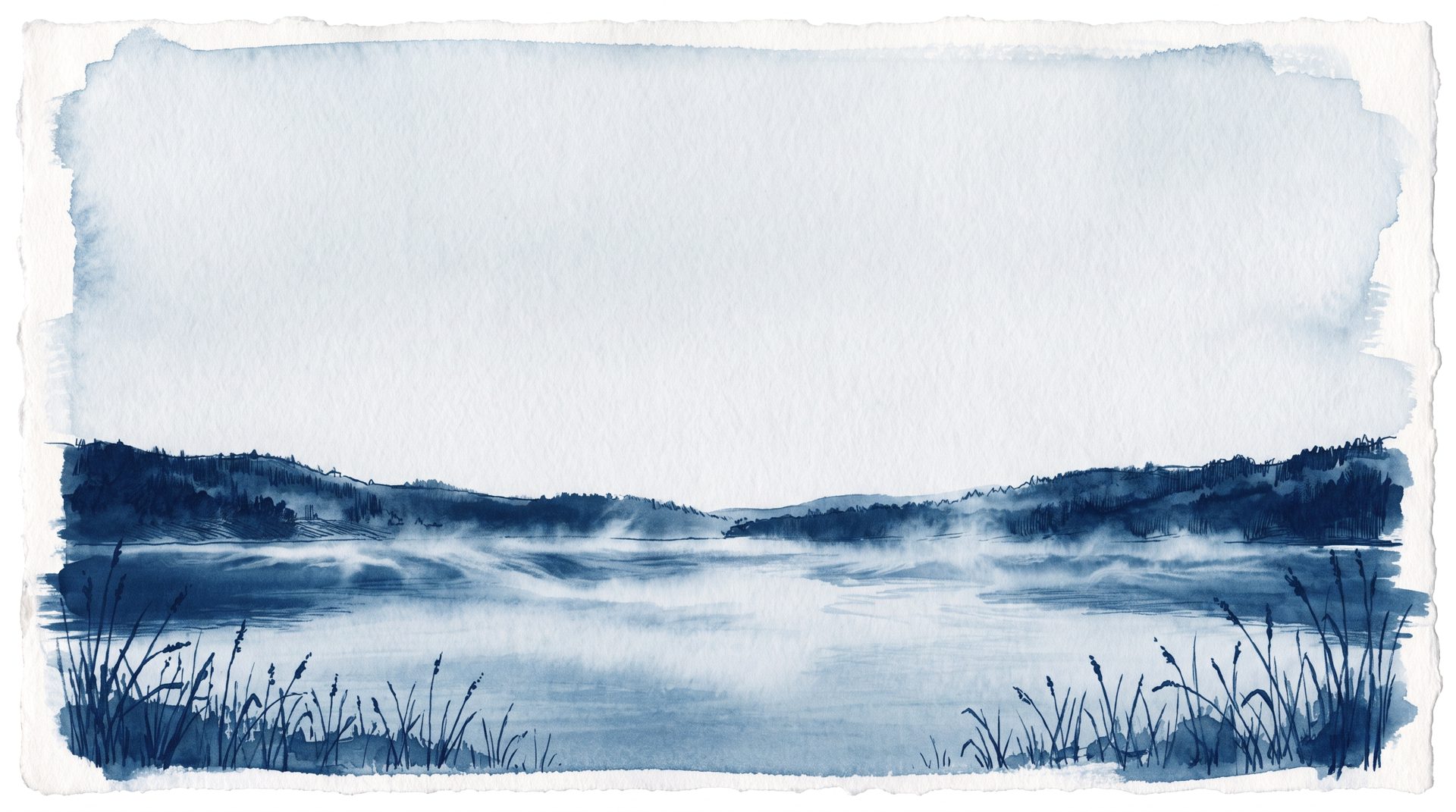
Mist sits on the water in the morning and lifts slowly.
A4
#A8471F
The gantry crane at the old boatyard, and the chestnut woods behind it in late autumn.
View 05The place
The workshop is at the top of Lake Orta, in the town where most of the metal in Italian kitchens was pressed, spun or turned.
In 1853 Baldassarre Cane took the money from his patent on the seltzer syphon and built the first metalworking factory on the lakeside. The men who trained in it left and opened their own. Within two generations the coffee pots, the pressure cookers, the pans and the cutlery of Italy were being made within a few kilometres of here.
The first hydraulic lathe in the valley was built in secret by Gaudenzio Piana, who had seen one in a prison in Genoa after the revolts of 1849. The neighbours worked out what he was doing soon enough, and the valley filled with lathes driven by the river.
Pewter first, then silver, then aluminium, then steel. We came in on the aluminium.
From 1926 a rayon works discharged copper and ammonium sulphate into the water. By February 1985 the pH had fallen to 3.9 through all 143 metres of it, and the lake was holding copper, aluminium, zinc and nickel in solution.
Between May 1989 and June 1990 a barge called the Sant’Angelo crossed and recrossed the lake spraying powdered limestone, 10,900 tons of it. The fish came back. By 2000 the water was reading 6.7 again.
The workshop
Two people. One CNC lathe and one manual lathe in a unit on the industrial road at Crusinallo. Anodizing goes out to a line four kilometres away, the same one the pan makers use.
View 06Ordering
01
It reaches the workshop as a parts list: the length, the finish, and the colour if it is anodized.
02
Nothing is held in stock. Four to six weeks, longer if you order in August.
03
We invoice from Italy and you pay by bank transfer once the bottle is finished. Nothing is taken up front.
04
In a card tube packed with folded paper. Anywhere in the EU, included in the price.
Lifetime of the metal
Send a bottle back and we re-cut it
Re-turned, re-brushed, or stripped and re-anodized in a different colour. You pay the postage. We do not charge for the work.
View 07Order
Tell us the length and the finish, and the colour if it is anodized. One of us reads these, usually in the evening.